

Semi-Solids

Groupe PARIMA develops and manufactures semi‑solid drug products.

semi-solids-banner
SEMI-SOLID DEVELOPMENT AND MANUFACTURING

CONSISTENT PERFORMANCE AT EVERY SCALE

Semi-solid drug products require careful control of formulation composition, process parameters, and product attributes to maintain consistent performance through scale-up and commercial manufacturing. Groupe PARIMA combines process understanding, fit-for-purpose analytical methods, and disciplined GMP execution to support robust and reproducible manufacturing.

Performance that holds at scale

Consistency at scale depends on controlling the process conditions that define semi‑solid performance. We combine process understanding, targeted analytical support, and disciplined documentation to support scale-up, validation, and reliable commercial manufacturing.

CONSISTENT PERFORMANCE AT SCALE

We define and control process parameters during scale-up that influence rheology, uniformity, and other critical product attributes.

LIFECYCLE CONTROL STRATEGY

Using QbD principles, we establish control strategies based on product and process understanding to support consistent performance throughout the product lifecycle.

IN‑VITRO RELEASE TESTING

IVRT methods using Franz diffusion and enhancer cells to assess performance and comparability.

Scalable processes by design

We use QbD from the start to define CQAs, identify CPPs affecting viscosity, uniformity, and API release, and build a scalable process supported by the right documentation.

Formulation Robustness

We assess formulation robustness that includes product–packaging compatibility studies to identify potential interactions that may affect product stability or performance. We also support extractables and leachables studies where required.

Critical Quality Attributes

We ranslate target product profile into CQAs that matter most for semi-solids, such as consistency, uniformity, stability, and performance-relevant characteristics.

Critical Process Parameters

Our team identifies process parameters that influence viscosity behavior, uniformity, and API release, with specific attention to mixing and filling conditions.

Consistency across the lifecycle

Groupe PARIMA applies control strategies to maintain consistent semi‑solid process and product performance throughout the lifecycle and support process validation and routine production.

Establish a scalable process

We define a reproducible process suitable for clinical, exhibit, and commercial production, supported by fit-for-purpose analytical methods aligned with semi-solid scale-up.

Dosage Form capabilities

Groupe PARIMA applies dosage-form-specific development and manufacturing capabilities to keep critical attributes consistent as scale-up, equipment, and demand evolve.

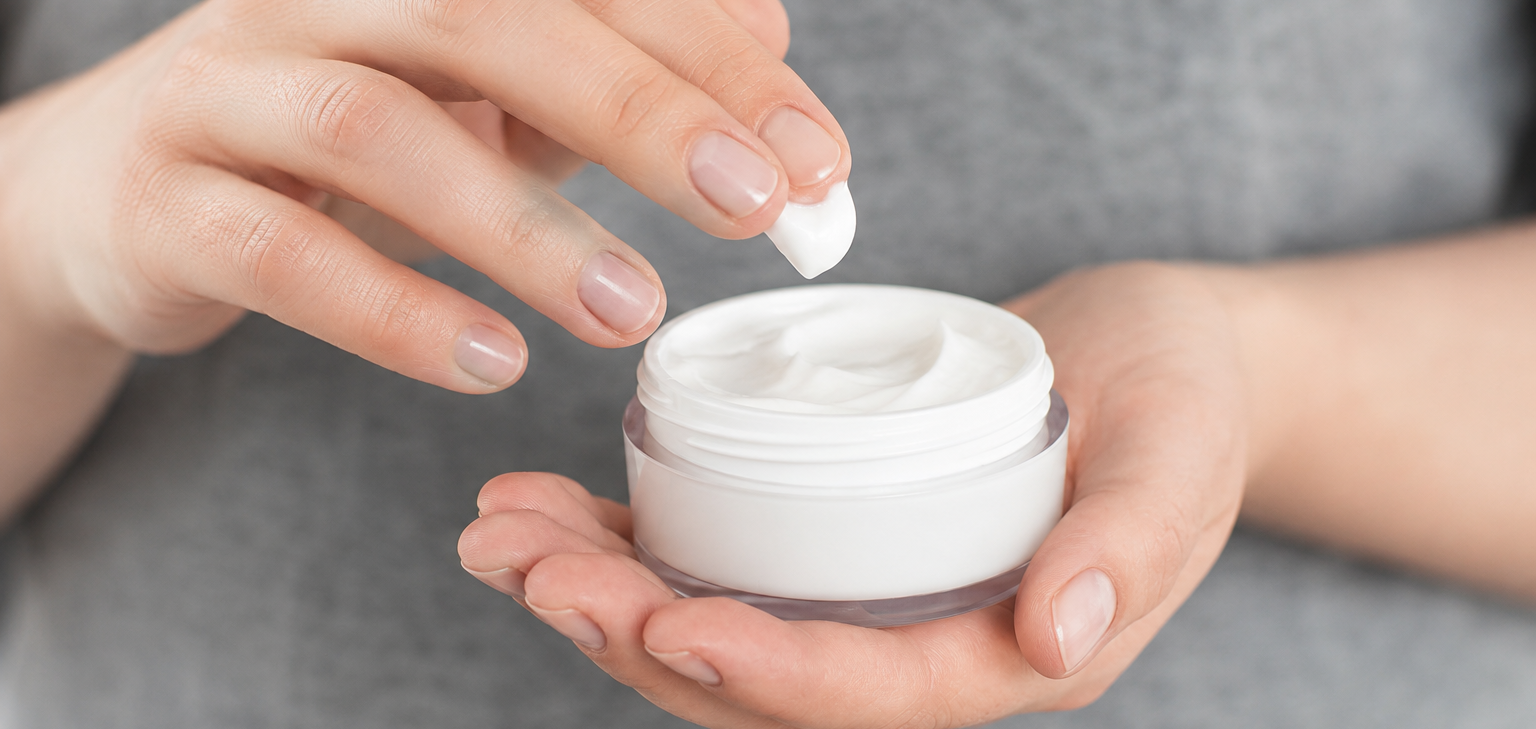
cream
Cream

We develop oil-in-water and water-in-oil creams using high-shear homogenization, validated for viscosity, droplet size, and phase stability across shelf life.

  • Emulsion stability under temperature cycling.
  • Homogeneous distribution of poorly soluble APIs.
  • Optimization of pH and preservative systems for microbial protection.
ointment
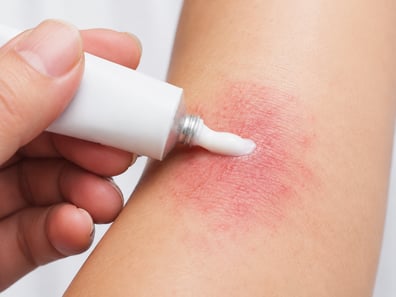
Ointment

We develop ointments with controlled API solubilization or dispersion and consistent texture and in vitro permeation testing as needed.

  • Choose the right oleaginous or absorption base.
  • Resolve issues with API sedimentation or crystallization.
  • Minimize grittiness and ensure consistent texture and application profile.

lotion
Lotion

We develop lotions with controlled flow properties and stable emulsions, using a scale-ready approach that maintains uniformity through optimized mixing, shear, and cooling profiles.

  • Enhance spreadability without compromising API stability.
  • Select non-irritant emulsifiers and humectants for sensitive applications.
  • Ensure physical stability and microbial robustness in low-viscosity systems.
gel
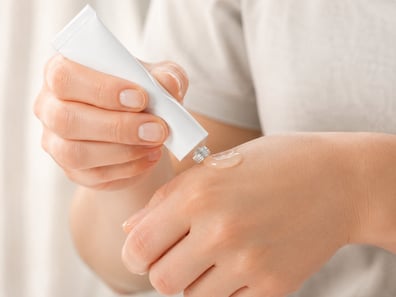
Gel

We develop gels with highly sensitive to formulation conditions such as polymer level and pH, which is why control matters early. Our team applies IVRT to support formulation optimization and strengthen decision-making.

  • Select gelling agents based on viscosity and drug release.
  • Resolve API-polymer interactions that may impact clarity or stability.
  • Ensure batch-to-batch rheological consistency using detailed viscosity and texture analysis.

We ensure semi-solid shelf life by controlling key risk drivers from day one, tightening process controls, and confirming performance through fit-for-purpose stability studies.

Resources

Access practical guidance on semi-solid development and manufacturing that affects shelf life.

White papers
2026/07/06
How Drug Product Formulation Works: Topical, Oral, and Nasal Liquid and Semi-Solid Dosage Forms
White papers
2026/07/03
How Early API Characterization Can Reduce Formulation and Scale-up Risks
Blog
2026/07/03
Topical 101: A Guide to Complex Dermatology Formulation Development
White papers
2026/07/06
How Drug Product Formulation Works: Topical, Oral, and Nasal Liquid and Semi-Solid Dosage Forms
White papers
2026/07/03
How Early API Characterization Can Reduce Formulation and Scale-up Risks
Blog
2026/07/03
Topical 101: A Guide to Complex Dermatology Formulation Development

Contact Us

De-risk your semi-solid products.

Tell us about your dosage form and current stage, and discuss shelf-life drivers, process controls, and a practical path to consistent manufacturing.